
 In the age of the quantified self, there’s been a longstanding assumption that the closer a wearable sensor is to a relevant body part, the more accurate the data is likely to be. This assumption makes perfect logical sense, not least because most product developers are engineers, and therefore, logical people. But human activity isn’t a product of logic. In some cases, a richer data picture can be achieved from sensing that’s captured near, but not on, the body,
Sleep tracking is an obvious example. Sure, you can wear a wrist-worn sleep tracker and it’ll do all things the product says it will do. But once you’re asleep, which is the more meaningful data point: how many times you turned over, or what your body did once you did turn over?
The first example only tells you that you had a less-restful sleep; that’s your wrist tracker talking. In the second case, an off-body smart mattress not only reported the times you turned over, but also that when you did, you repeatedly tried to shift your weight to one side, sometimes more than once.
Hmm, why was that? Easier to breathe from that side? Favoring around a subtle ache that got overlooked during the day? Reflux starting, or creeping back? Cause for a checkup? Generally speaking, trackers only tell you whether something’s good or bad; they don’t drop off at why. The more insights you have into why, the more useful the tracking becomes.
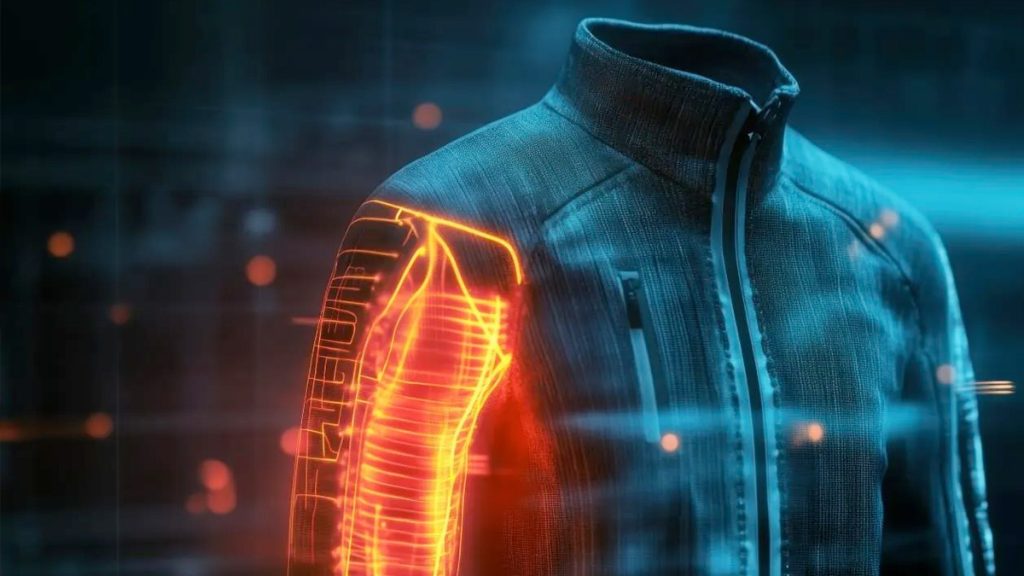
Recent findings by a team at Kings College London have made a similar case for off-body monitoring, this time based on clothing. Think about how your clothes move when you swing your arms or legs. The fabric doesn’t just go where your arm or leg goes. It billows and ripples. It lags behind the motion and then catches up. When tracked by a smart fabric, these associated motions create a richer picture of what an arm or leg-worn sensor can track from direct limb motion.
According to the team’s findings, sensors attached to fabric can improve motion recognition accuracy by up to 40% and require approximately 80% less movement history (for interpretation) compared to sensors directly attached to the body.
Think of the implications for, say aging in place. Nothing uncomfortable or unwieldy to wear, but granular, real-time data reports when someone is say, progressively unsteady and might fall. When it comes to crisis events like a senior fall, an ounce of prevention is worth a ton of cure. Every day, more than 100 Americans aged 65+ die from injuries sustained in a fall.
Given how small, powerful and energy efficient sensors are becoming, we won’t be surprised to start seeing them
# # #